The CRA's SALT Tool Is the First Step to a Successful DIY SR&ED Claim
Learn how to use the CRA's Self-Assessment and Learning Tool (SALT) to determine if your project is eligible for SR&ED tax credits
The CRA's SALT Tool Is the First Step to a Successful DIY SR&ED Claim — Here's How to Use It
If you're a startup founder, engineer, or operator managing your own SR&ED claim, the process can seem daunting. But the CRA provides a free tool that makes it easier:
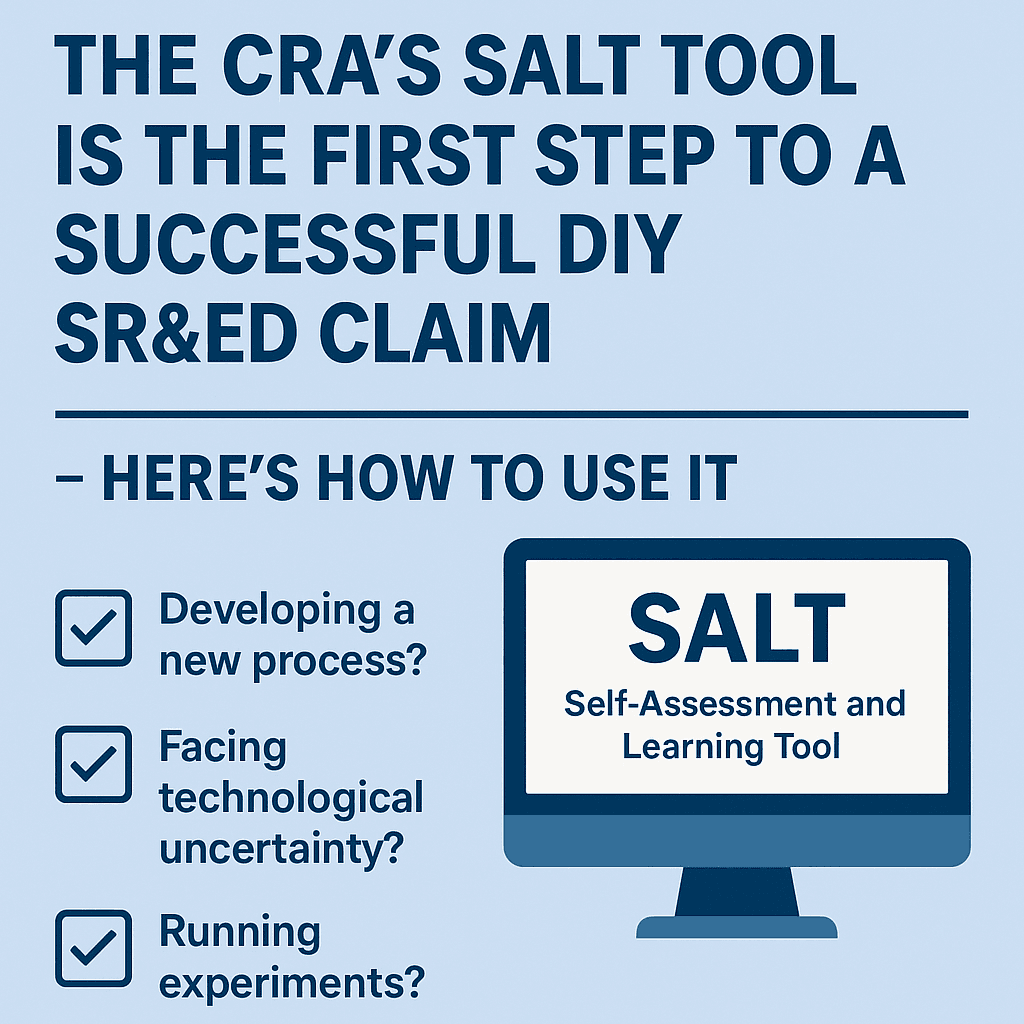
The Self-Assessment and Learning Tool (SALT) is an official, structured questionnaire that helps you determine if your project is likely eligible for SR&ED. Try SALT here:
It walks you through key questions:
- Are you developing a new process, method, or product?
- Are you facing a technological uncertainty that can’t be resolved through public knowledge?
- Are you running experiments, prototypes, or iterations to generate new understanding?
- Are you collecting data and feeding it back into your development process?
At the end, you’ll receive a clear result. For example:
“It is very likely that your project includes work that would be SR&ED.”
And if you’re still unsure, SALT offers a direct link to contact an SR&ED Specialist at CRA for confirmation and guidance. Once you’ve validated your eligibility, the next step is documenting it effectively.
That’s where SREDSimplify comes in.
Our platform helps you move from eligibility to execution:
- Instantly generate a CRA-aligned SR&ED one-pager to outline your project
- Summarize your technical activities and uncertainties clearly
- Prepare for deeper documentation or consulting support if needed
- Start with SALT to confirm you’re on the right track.
Then use SREDSimplify to organize your project into a format the CRA (and consultants) understand.
Learn more about SREDSimplify: